
In South Africa, we understand the realities farmers and site managers face every day — unpredictable weather, rising input costs, strict safety regulations, and the constant pressure to move materials efficiently without compromising product quality. At Vaal Bulk Bags, we work alongside clients across the agriculture industry and mining industry, helping them solve one core challenge: how to store and transport large quantities safely, efficiently, and cost-effectively.
A well-designed bulk bag is more than just packaging. It’s an essential material handling tool that protects your product, your people, and your bottom line.
In this practical guide, we explore the real benefits of bulk bags, how they improve storage and transportation, and what South African farmers and site managers should consider when choosing the right solution.
Understanding the Modern Bulk Bag
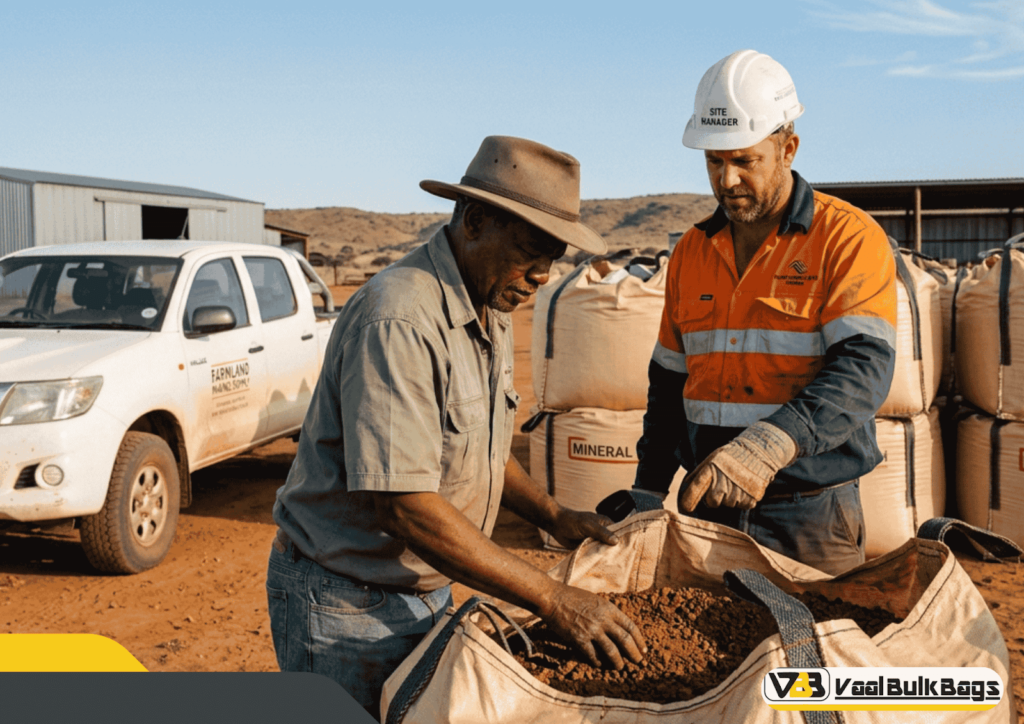
A bulk bag — also known as a fibc or flexible intermediate bulk container — is a heavy-duty industrial sack made primarily from woven polypropylene. Designed to carry huge volumes of dry bulk materials, it replaces smaller packaging and reduces the need for heavy wooden pallets and multiple handling steps.
Unlike an ordinary plastic sack, FIBC bags are engineered to meet strict safety standards, especially when used in demanding environments like mining, food processing, or the chemical industry.
Bulk bags come in various sizes and configurations, including:
- Open top
- Duffle top
- Filling spout and discharge spouts
- With or without a liner
- Food-grade options
- UN-certified and uncertified options for hazardous or non-hazardous goods
Because bulk bags come in various specifications, they can be customised to suit your exact packaging needs — whether you’re transporting dry fertiliser, minerals and metals, resin, or agricultural products.
Why Bulk Bags Are Ideal for South African Agriculture
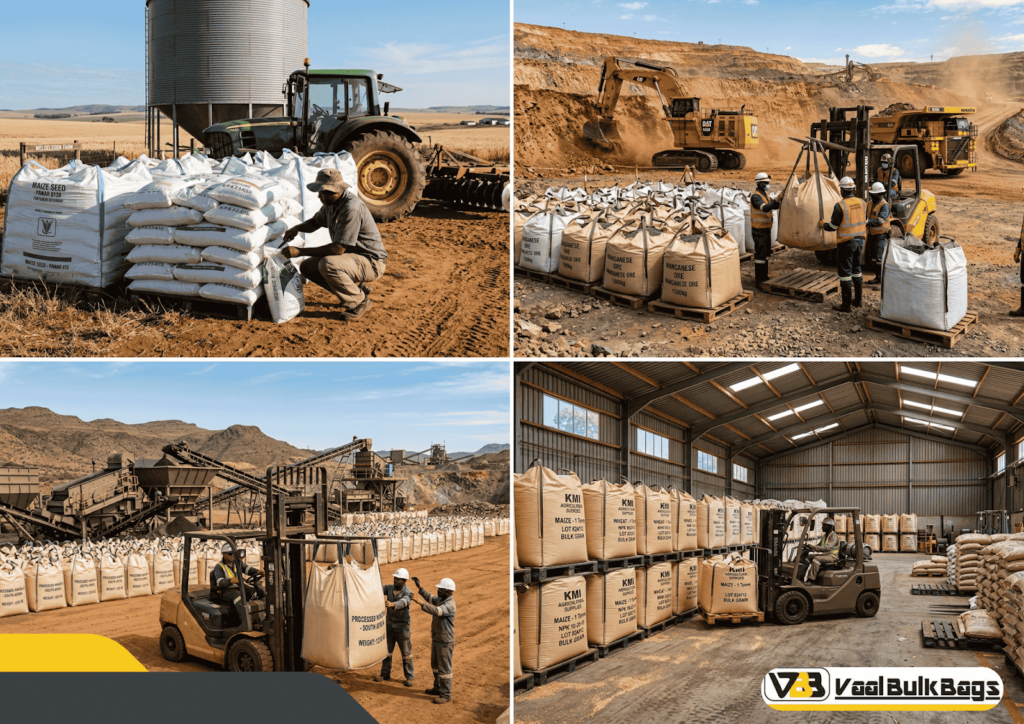
The agriculture industry in South Africa operates under challenging conditions. From grain and maize to animal feed and products like sugar, proper storage and transport are critical.
1. Improved Efficiency in Handling Large Quantities
One bulk bag can replace dozens of smaller sacks. Instead of manually lifting individual units, a forklift can move materials from one loading point to another in a single lift.
This dramatically reduces:
- Labour time
- The risk of injury
- Handling costs
For farms moving fertiliser, seed, pet food, or grain, using bulk dramatically improves productivity.
2. Protection from Moisture and Contamination
Many agricultural products are sensitive to moisture. A moisture-resistant bulk bag, especially when paired with an internal liner, helps protect the bag and its contents from humidity and contamination.
Bulk bags provide secure containment, reducing the risk of spillage and protecting product quality during storage and transport.
3. Space-Efficient Storage
Traditional palletised sacks consume significant warehouse space. Bulk bags are easy to store, stack, and position within a storage area, making them a space-efficient solution.
Switching to bulk bags allows farmers to:
- Optimise shed capacity
- Reduce clutter
- Improve stock rotation
4. Cost Savings Without Compromising Safety
When evaluating the benefits of bulk, cost-effectiveness is a major factor. A high-quality bulk bag reduces packaging waste, labour, and breakage.
Compared to rigid containers or drums, fibc bulk bags are lightweight yet strong, lowering freight costs and simplifying storage and transportation logistics.
The Role of Bulk Bags in the Mining Industry
South Africa’s mining industry depends heavily on reliable bulk packaging solutions. Whether transporting dry mineral concentrates, powder, or processed minerals and metals, safety and durability are non-negotiable.
1. Designed for Demanding Environments
Bulk bags are ideal for harsh mining sites because woven polypropylene bags resist tearing and abrasion. Bulk bags offer exceptional strength-to-weight ratios, making them suitable for transporting dry materials across rough terrain.
2. Compliance with Strict Safety Requirements
The mining industry operates under strict safety regulations. UN-certified fibcs ensure hazardous materials are transported securely.
Bulk bags may also include:
- Conductive or anti-static properties
- Reinforced lifting loops
- Custom discharge spouts
These features reduce spillage, contamination, and workplace hazards.
3. Streamlined On-Site Material Handling
Using bulk packaging simplifies material handling on-site. Instead of handling materials from one small sack at a time, one bag allows teams to load and unload faster.
This is particularly important when moving materials from one processing stage to another.
Applications Across Various Industries
While agriculture and mining are key sectors, bulk bags can be used across a range of industries, including:
- Food processing industry
- Construction sector
- Chemical industry
- Recycling operations
Products like sugar, flour, feed, fertiliser, sand, cement, and resin are commonly transported in bulk bags.
Because bulk bags are also suitable for food-grade applications, they support high-quality packaging standards for food products and food processing.
Practical Safety Checklist for Farmers and Site Managers
To maximise the benefits of using bulk bags, we recommend the following checklist:
Before Purchase
- Confirm load capacity requirements
- Verify whether you need food-grade or UN-certified options
- Assess whether a liner is required
- Ensure your supplier complies with ISO quality standards
During Filling
- Never exceed the rated Safe Working Load
- Ensure even filling to prevent imbalance
- Check that discharge spouts and lifting loops are secure
During Storage and Transport
- Avoid sharp edges in the storage area
- Keep bags off wet surfaces
- Inspect lifting loops before forklift handling
- Stack according to manufacturer guidelines
After Use
- Inspect for damage
- Determine whether the bag is reusable
- Store empty bags in a dry environment
Bulk bags are also recyclable when properly processed, supporting sustainable packaging practices.
Best Fit: Who Should Consider Switching?
Switching to bulk bags makes sense for:
- Commercial farmers handling large quantities of grain or fertiliser
- Mining operators transporting dry mineral outputs
- Feed producers and pet food manufacturers
- Construction contractors managing cement and sand
- Businesses need ideal storage and transportation for dry bulk materials
If your operation involves storing and transporting dry products in bulk, this solution is likely a top choice.
Why the Right Supplier Matters
Not all fibc bulk products are manufactured equally. Poor-quality or un-certified bags create serious safety risks.
At Vaal Bulk Bags, we specialise in the manufacture and supply of high-quality bulk bags tailored to South African conditions. Here’s why clients trust us:
- ISO-certified quality standards
- Customisable solutions for diverse packaging needs
- Fast turnaround and reliable delivery
- Sustainable focus with recyclable materials and reuse initiatives
- Experience across agriculture, mining, and food processing
You can explore our full range of bulk bags on our website to find solutions designed specifically for your industry.
A Neutral Comparison: Bulk Bags vs Traditional Packaging
Traditional sacks:
- Labour-intensive
- Higher spillage risk
- Require pallet stacking
- Less efficient for large-scale operations
Rigid containers or drums:
- Expensive
- Heavy
- Less flexible
Bulk bags:
- Space-efficient
- Cost-effective
- Designed for storage and transport
- Adaptable to various industries
While competitors may offer woven polypropylene bags at lower prices, quality control, certification, and durability should never be compromised. We encourage buyers to verify safety documentation and production standards before making decisions.
For direct enquiries or tailored solutions, you can contact us here:
http://vaalbulkbags.co.za/Pages/Contact-Us.asp
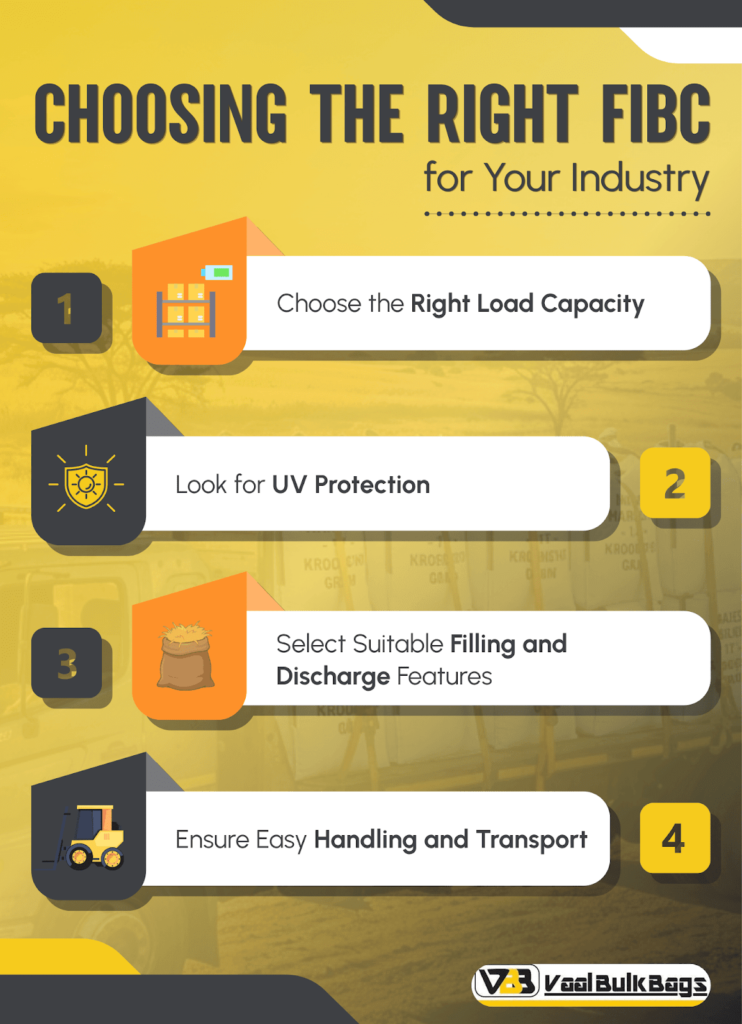
Choosing the Right FIBC for Your Industry
Frequently Asked Questions
What is the difference between a fibc and a bulk bag?
There is no functional difference. FIBC stands for flexible intermediate bulk container — the technical term for a bulk bag.
Are bulk bags reusable?
Many bulk bags are reusable if inspected and handled correctly. Always check manufacturer guidelines.
Can bulk bags be recycled?
Yes. Most are made from polypropylene, which is recyclable under the right processes.
Are bulk bags suitable for food processing?
Yes, provided you select food-grade options manufactured under strict hygiene controls.
How much weight can one bulk bag carry?
Depending on design, one bulk bag typically carries between 500kg and 2000kg.
The Takeaway: Efficiency, Safety, and Sustainability
The advantages of bulk bags go far beyond simple storage. They improve safety by reducing the risk of injury. They protect valuable products. They simplify logistics. And they support modern sustainability goals through recyclable and reusable designs.
For South African farmers and mining operators, bulk bags create a practical, scalable solution for modern bulk materials management.
When selecting a supplier, prioritise quality, compliance, and industry experience. If you are evaluating Fibcs for your operation, we invite you to explore our solutions and speak with our team about the right configuration for your needs.