
Bulk bags make life easier—until they’re used the wrong way. Then, things can go sideways pretty quickly.
At Vaal Bulk Bags, we’ve worked alongside industries across South Africa—from farms and food production facilities to construction and mining sites. And one thing we’ve learned? It’s not just about having a bulk bag—it’s about knowing how to use it properly.
In this guide, we’ll walk you through simple, practical tips to help you safely handle, transport, and store bulk bags—without the stress, damage, or unnecessary risks.
What Exactly Is a Bulk Bag (And Why It Matters)?
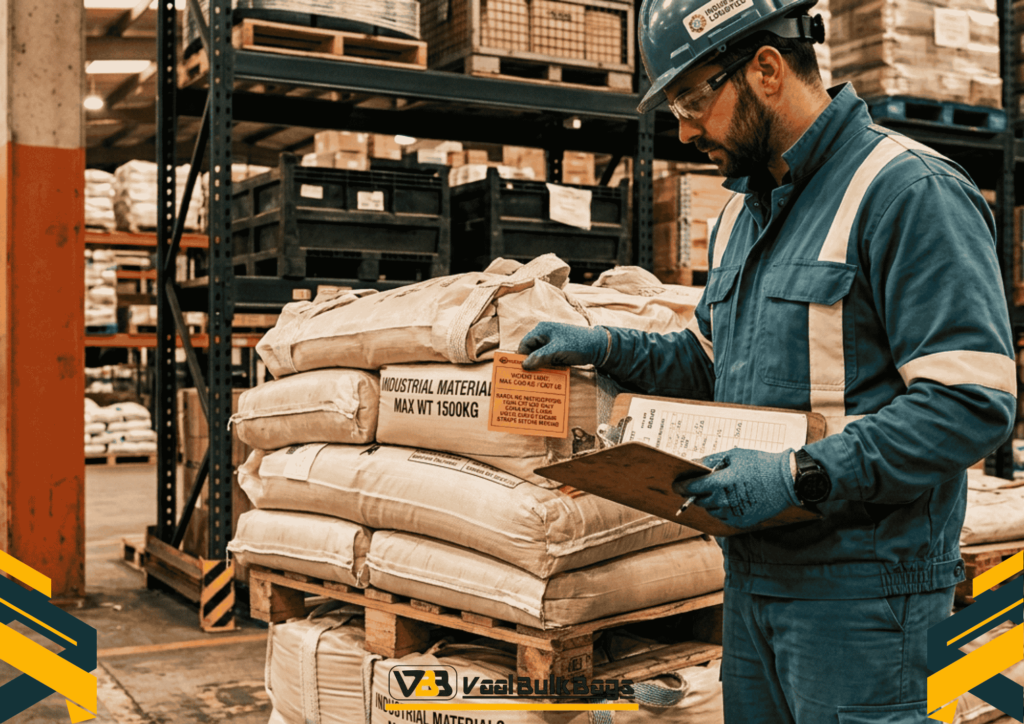
A bulk bag, also known as a FIBC (Flexible Intermediate Bulk Container), is designed to store and move large volumes of materials—anything from grain and sand to chemicals and powders.
These fibc bulk bags are made from woven polypropylene, which makes them strong, flexible, and ideal for industrial packaging. But like any tool, they only work well when used correctly.
Every bag has a safe working load (SWL) and a safety factor. Ignore those, and you risk damaging the bag—or worse, causing the bag to fail completely.
That’s why choosing the right bag for your application matters just as much as how you use it.
Why Safe Handling Is Such a Big Deal
Let’s be honest—handling bulk incorrectly is one of the quickest ways to create problems.
We’re talking about:
- Spillage and wasted product
- Damage and injury to workers
- Wear and tear that shortens the bag’s lifespan
- Costly downtime in your warehouse
Good bulk bag handling isn’t complicated—but it does require attention to detail and consistency.
Safe Handling Guidelines (Without the Jargon)
1. Use the Right Equipment Every Time
When handling bulk, always use proper lifting equipment like a forklift.
Make sure:
- The forks are spaced correctly
- All lifting loops are supported
- You’re not dragging or pulling bags using force
Those loops for easy handling are designed to carry weight evenly—so use them properly.
2. Don’t Push the Limits
Every safe bulk bag comes with an SWL. That’s not a suggestion—it’s a limit.
Going beyond that can:
- Weaken the fabric over time
- Lead to degradation
- Increase the risk of failure
Especially when handling fibcs repeatedly, sticking to limits protects both your team and your materials within.
3. Lift Smart, Not Fast
We’ve seen it too often—rushed lifting leading to problems.
Avoid:
- Lifting from one loop
- Jerking movements
- Tilting the bag mid-air
Instead, lift evenly and steadily. It helps maintain weight distribution and keeps the structural integrity intact.
4. Watch Out for Static Electricity
If you’re dealing with flammable or hazardous materials, this one’s critical.
Static electricity can build up quickly, especially during filling and discharging. To reduce risk:
- Use anti-static or conductive bags
- Choose the right type of fibc, like type C or type B
- Ensure proper grounding
This is essential for safe handling in sensitive environments.
Storing Bulk Bags the Right Way
1. Indoor Storage Is Always Better
If you have the option, store bulk bags indoors in a clean warehouse.
Why? Because it protects them from:
- Direct sunlight
- UV exposure
- Extreme weather conditions
Over time, UV exposure leads to degradation, weakening the fabric over time.
2. Storing Bags Outside? Do It Carefully
We get it—sometimes outdoor storage is unavoidable.
If you’re keeping bags outside:
- Use waterproof covers
- Place them on a pallet to avoid ground moisture
- Protect bulk bags from the elements
Rain, humidity levels, and sun exposure can damage both the bags and the materials within.
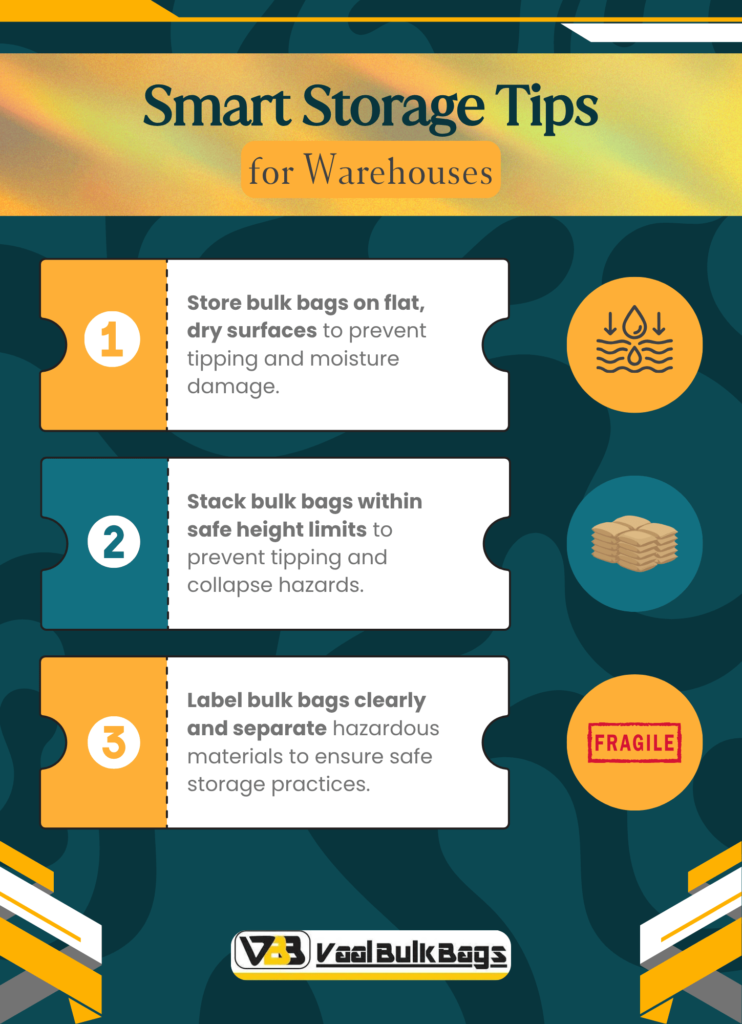
3. Stack Bags Safely (This One Matters)
Stacking sounds simple—but it’s often done wrong.
Follow supported stacking methods:
- Stack bags evenly
- Avoid stacking four bags unless they’re designed for it
- Keep filled bags stable
Incorrect stacking is a common safety risk in any warehouse space.
4. Keep Things Clean and Organised
A tidy warehouse isn’t just nice to have—it’s essential for warehouse safety.
Keep:
- Aisles clear
- Bags off the ground
- Storage areas dry
This is especially important for food-grade products where cleanliness matters.
Transporting and Storing Without Damage
Transport is where many bags get damaged—often because of small mistakes.
When transporting and storing:
- Secure bags properly
- Avoid overloading
- Protect bags from the elements
Rough handling fibcs during transport can quickly lead to spillage or damage.
Inspect Before You Reuse
Thinking about reuse? That’s fine—but only if the bag is still in good condition.
Check for:
- Frayed loops
- Tears or holes
- Signs of wear and tear
If the bag shows damage, don’t risk it. Reuse should never compromise safety.
Choosing the Right Bag Makes Everything Easier
Not all bulk bags are the same.
Choosing the right bag means considering:
- The type of fibc you need
- Whether it’s for hazardous materials or food-grade use
- Environmental exposure (like UV-resistant options)
- The weight and flowable nature of your material
At Vaal Bulk Bags, we help you find the right bag for your application—so you’re not guessing.
Explore our full range here:
https://vaal-bulk-bags.co.za/
Smart Storage Tips for Warehouses
Best Fit: Who Needs These Guidelines Most?
These tips are especially helpful if you:
- Manage a busy warehouse
- Work in agriculture or food production
- Handle construction or mining materials
- Deal with flammable or hazardous materials
Basically, if you’re handling bulk regularly, this matters.
Why Work With Vaal Bulk Bags?
We’re not just another supplier—we’re hands-on problem solvers.
Here’s what sets us apart:
- Real experience across multiple industries
- High-quality bulk bags built for South African conditions
- Fast, reliable turnaround times
- Flexible, custom packaging solutions
- A focus on safety, durability, and long-term value
Learn more about how we can help:
https://vaal-bulk-bags.co.za/
How We Compare (Honestly)
Let’s keep it simple.
Some suppliers:
- Offer limited options
- Don’t provide guidance
- Focus only on price
Us at Vaal Bulk Bags:
- Help you choose the right bag
- Share practical FIBC handling guidelines
- Deliver consistent quality you can rely on
We’re here for the long run—not just a quick sale.
A Quick Safety Checklist You Can Use Daily
Before you start handling bulk bags safely, run through this:
- Is the bag damage-free?
- Are you within the safe working load?
- Is your lifting equipment ready?
- Are you following safe handling guidelines?
- Is your storage area clean and dry?
Simple checks—big difference.
FAQ: Quick Answers You’ll Actually Use
Can I reuse bulk bags?
Yes, but only if they’re still in good condition and designed for reuse.
What’s the best way to store bulk bags safely?
Keep them in a dry warehouse, away from direct sunlight and moisture.
Can I stack bags on top of each other?
Yes—but only using supported stacking methods and within safe limits.
What bag should I use for flammable materials?
Use anti-static or conductive FIBCs, like type C options.
Why do bags fail sometimes?
Usually, it is due to improper handling, overloading, or environmental damage.
Final Thoughts: Keep It Simple, Keep It Safe
At the end of the day, safe bulk bag storage and handling come down to doing the basics right—every single time.
Use the right equipment. Follow the limits. Store bags properly. And always keep safety top of mind.
At Vaal Bulk Bags, we’re here to help you do exactly that—with high-quality, reliable packaging solutions and practical advice you can actually use.
If you’re ready to improve how you handle and store bulk bags, get in touch with our team today:
https://vaal-bulk-bags.co.za/